
Selective action on tumour cells
Oncology is the Institute's primary direction. A new class of highly selective cytostatic drugs has been created: they act on tumour cells without damaging healthy tissue.

Why a new approach is needed
Modern protocols have improved outcomes for many cancers, but responses to therapy still vary from patient to patient and the toxicity of therapy weighs heavily on patients already weakened by the disease.
The new class of drugs developed at the Institute acts selectively on tumour cells. In the studies conducted, they showed no toxicity to healthy cells and were active against both solid and haematological tumours — at early and later stages, including metastatic disease.
What sets the new class apart
- 01
Selectivity
Action on tumour cells, including metastases, without damaging healthy tissue.
- 02
Safety for healthy cells
No toxicity to healthy cells was found in the studies.
- 03
Clinical application protocols
Based on the research findings, protocols have been established for the key sites of solid and haematological tumours.
- 04
Early therapeutic response
The drug reaches tumour cells quickly, and the effect appears already in the early stages of use.
- 05
Crossing the blood–brain barrier
The drug crosses the blood–brain barrier and shows high activity in intracerebral tumours, as confirmed by studies of resected tumour tissue.
- 06
Use at advanced stages
Because it shows no toxicity, the drug can be used at advanced stages of the disease, where it has shown high efficacy.
Blocking tumour cell division
The antitumour effect comes from blocking tumour cell division at two levels. The first is the G1 phase: the drug acts at the very start of the cell's life cycle and blocks its maturation. This level accounts for about 20% of the activity.
The second, key level is mitosis, with about 80% of the activity: if the cell still begins to divide, the drug blocks division at its final stages, when the chromosomes are already separating. The cell loses viability, therapeutic pathomorphosis sets in, and the destroyed cell is cleared by macrophages.

How the protocol is built
The duration of the protocol is set individually and depends on:
- the tumour site
- the stage of the disease
- the presence and extent of metastases
- previous highly toxic therapy (chemotherapy)
Clinical monitoring is required while the protocol is in use.
Pharmacokinetics
- A therapeutic concentration is reached 30–40 minutes after administration.
- At the optimal dose, significant destruction of tumour cells is observed within 15–20 days.
- The effect can last from several days to several months — until genetically altered cells are fully eliminated.
- No tolerance to the drug has been observed.
The drug is not used at the same time as radiotherapy or chemoradiotherapy: these methods substantially increase the systemic toxic load and can cancel out the drug's regulatory mechanism of action.
In vitro research
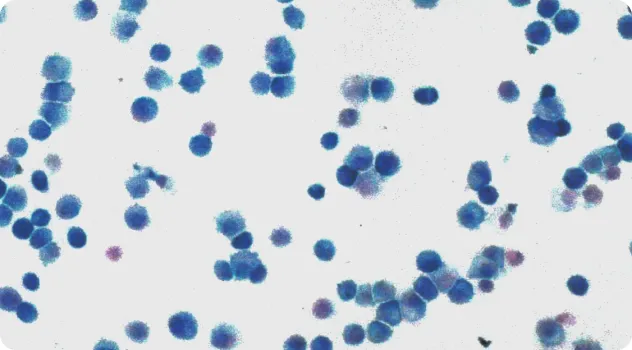
Negative control, 24 hUntreated KB cells. 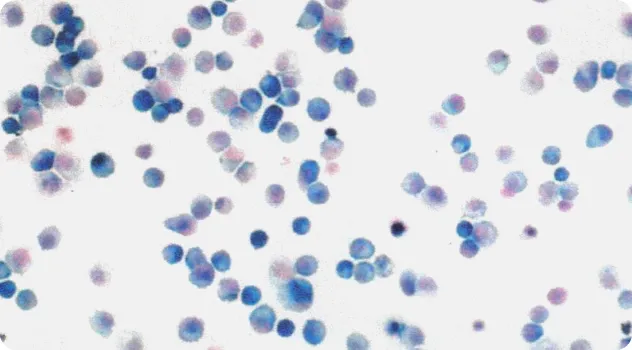
Negative control, 48 hUntreated KB cells. 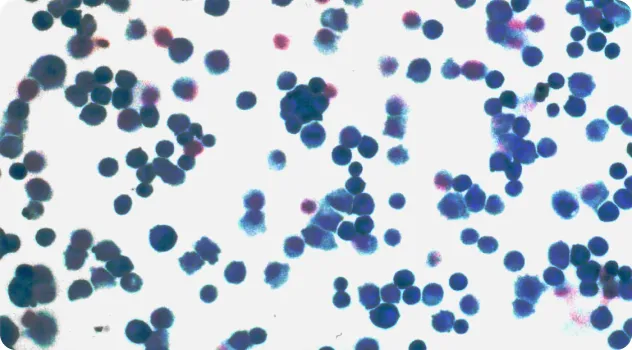
AmritOncosolve on KB cells, 24 hConcentration range 0.00000008–0.0000003 mL/mL. 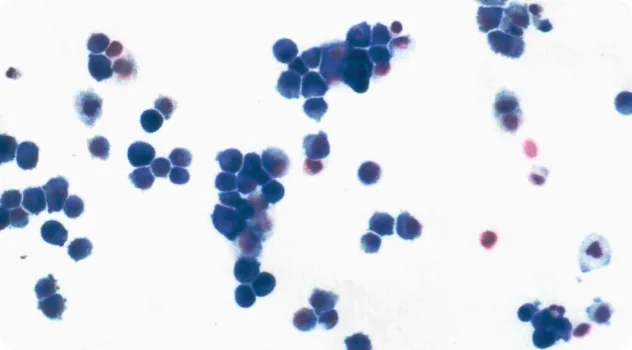
AmritOncosolve on KB cells, 48 hConcentration range 0.00000008–0.0000003 mL/mL. 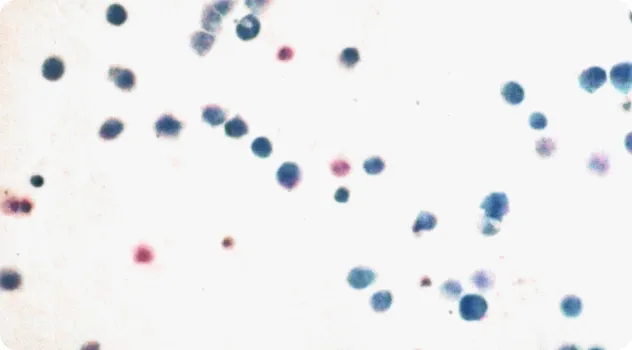
AmritOncosolve on KB cells, 24 hConcentration 0.000005 mL/mL. 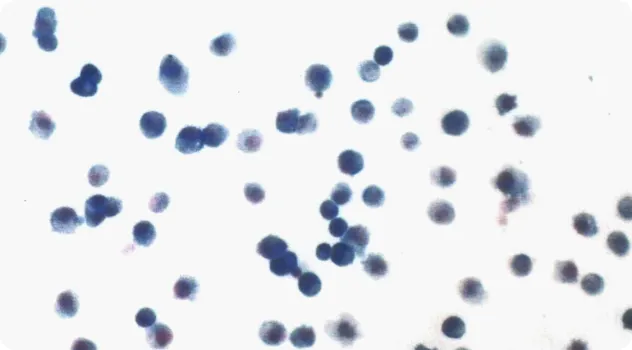
AmritOncosolve on KB cells, 48 hConcentration 0.000005 mL/mL. 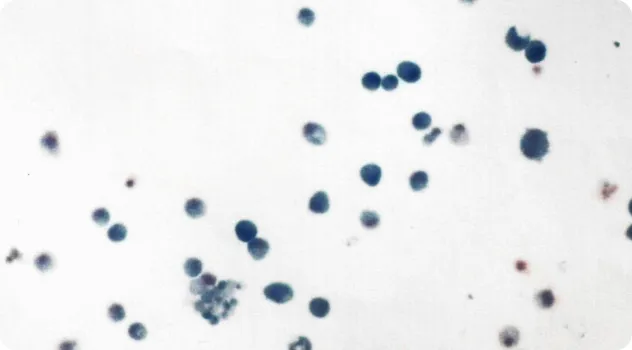
AmritOncosolve on KB cells, 24 hConcentration 0.00002 mL/mL. Similar results were obtained after 48-hour incubation. 
AmritOncosolve on KB cells, 24 hConcentration 0.000078 mL/mL. Similar results were obtained after 48-hour incubation. 
AmritOncosolve on KB cells, 24 hConcentration range 0.000315–0.005 mL/mL. 
AmritOncosolve on KB cells, 48 hConcentration range 0.000315–0.005 mL/mL.


Source: archive micrographs from the Institute's in vitro studies on the human KB carcinoma cell line. The images are shown for illustration. Full study reports are provided after an NDA has been signed.
A step-by-step development programme
- Stage 1
In vitro
The drug was confirmed to act only on atypical cells while they are dividing.
Completed - Stage 2
In vivo
Pronounced antitumour activity in the standard P388 (leukaemia), Lewis carcinoma and Walker sarcoma models. The drug was given after the tumour had formed; complete suppression of tumour growth was recorded in the experimental models.
Completed - Stage 3
Clinical trials
A step-by-step clinical programme of Phase I–III trials involving patients.
Ongoing
Clinical trial phases
Patients with malignant brain tumours. Maximum tolerated doses, dosing regimens and administration parameters were established.
A controlled, randomised assessment of efficacy. The results confirmed the efficacy of the therapy and made it possible to develop protocols for its use.
Multicentre trials across 4 tumour sites: confirming efficacy and safety in a larger patient population.
Research materials
Research materials are provided to partners once the terms of cooperation have been agreed and an NDA has been signed.